|
Departure Interview #1
John and Mike grew up in Palmer, a small town in Western Massachusetts and have been booking shows for 14 years and counting. We met at Apollo 1 Pizza in Palmer, in late November 2011 and discussed the importance of DIY, all ages shows, what got them started, and what keeps them going. This interview was transcribed over several days in early 2012.
Interview by Meghan Minior
DEPARTURE: So why don’t we start with a little introduction.
John: Hi, my name is John.
Mike: I’m Mike.
DEPARTURE: The old store and the shed were both located in Palmer, MA. What was it like growing up there? Was it a positive experience? Were there a lot of activities that you could get involved with outside of school?
Mike: There were definitely positive things and negative things, but mostly positive. I still live here in town, so there has to be something good that has come out of it. I had a pretty normal upbringing, I played outside a lot, played sports, and did the whole cub scout thing. It was probably pretty typical. But a lot of the activities were very structured with adult supervision, unless you are just playing out in the woods, which I actually did a lot of. So any of the activities or things that I went to were all just supervised activities.
John: I think my experience was mostly positive but I didn’t have a lot of adult supervision, (Mike laughs) so that usually meant causing a lot of trouble. So it is good that things like bands and shows could happen because that was a little less destructive I guess.
Mike: Definitely.
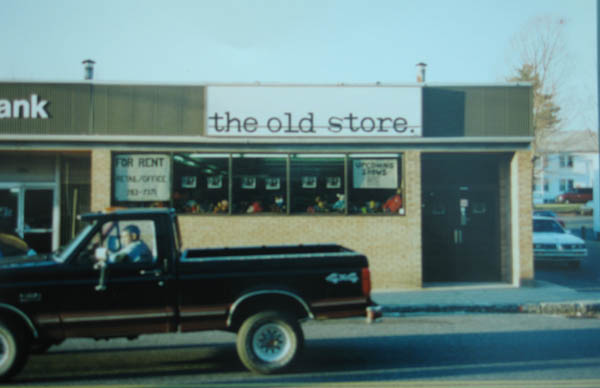 The Old Store, Palmer MA.
John: Aside from high school dances, I didn’t really feel like there was much of anything unless it was school related like sports or other things like that. Mike: Every town has their sports leagues and summer camp, so there’s always those types of activities. But there was not a whole lot of town provided activities. But you know what, I’ve had this conversation before with a lot of other people. You hear people complain in every town, “There’s nothing for these kids to do”, and actually that’s a crap statement . Let kids do whatever they want. They are kids, and they will figure it out. Like I mentioned before with running around and playing in the woods- those were the best times growing up. Its not like I needed a squared off 10x10 room in which to go and here’s where you have fun! DEPARTURE: yeah definitely. Mike: It actually really bothers me when I hear “there’s nothing for kids to do”. There’s tons of things for kids to do both structured and unstructured and there always should be money set aside for programs and for the development of teen centers. But if there is nothing for kids to do, kids will figure out something to do, that is part of being a kid I think. John: Another thing is being allowed to do it. Mike: Yeah that’s true. John: Its tricky. Mike: Exactly. I’m sure there’s a lot of parents now that don’t let their kids just run around unsupervised.
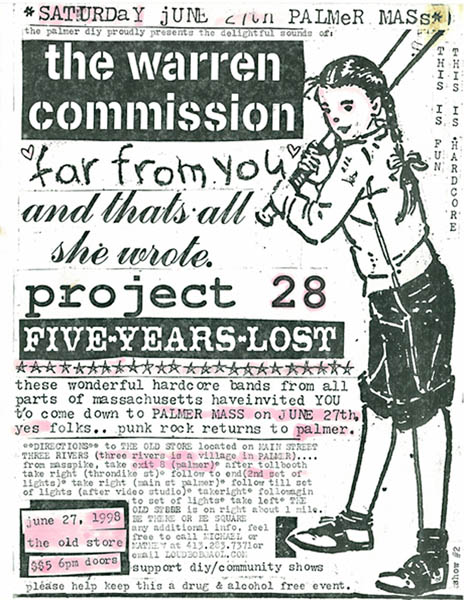 Old Store Show Flyer.
Mike: And that’s scary. Beyond sports, there wasn’t a teen center in town, and no after school art programs. It just wasn’t that type of a town. You go to school, and maybe you go home and play in your little league and that is pretty much what we had, which wasn’t bad, I’m not here to complain about it, but that’s what we had. There wasn’t an elaborate youth center for us to go to. DEPARTURE: What was the motivation and inspiration behind starting the Old Store and the shed? Do you feel like there was a need for these spaces in Palmer? Were there any all ages spaces in Palmer at the time? Mike; Starting off, we had this group of kids, this group of friends that went to shows because nothing ever happened here. I don’t even really know how we kind of “discovered it”. I got my licence, and then it was like “okay, lets go to Pearl Street or whatever, lets go to Worcester, and we discovered The Space and the Espresso bar. At the Espresso bar and Pearl St all these great things were going on, it totally opened up our eyes! “This is amazing!” “ This is loud music!” This is something, you know maybe we shouldn’t be doing this? That was fun, like, the allure for that. But, with the Old Store specifically, it was February 14, 1997 on Valentine’s Day, it was a show in Foxboro, MA that I went to, which was at a community center or something and it was a total DIY show. It was my first DIY show. It was kids running it, kids in bands, kids collecting money at the door, kids running the sound. I’m sure there was adults there, but seemingly to me there were no adults running the place, and that really just kind of blew my mind. You go to Pearl Street or the Espresso bar in Worcester or wherever and you have bouncers, people who check your ID and all this kind of weird structure, and here there was just kids doing it in Foxboro, a town not too unlike what was here. So a few weeks after that show I was talking to a group of friends and said “hey we should really do this ourselves” and I actually was kind of joking when I said it, you know “who would come to a show in Palmer?” It was kind of like this ridiculous idea, but everyone else was just like “no, lets try it!” So that’s really kind of how the idea sprang on, it was just an idea that we saw another town do this, with all kids that were basically just like us, making this thing happen. So it was like, let’s just give it a shot! We asked the Westies, who were from Sturbridge, if they wanted to play and when they said yes, it was like ( Mike makes a huge happy face). Its not a big deal now, well yeah it was you know, it was a big deal, when they said yes, because we knew who they were, they knew us, but when we asked them to come play in Palmer that was a huge deal, and it meant a lot. It was like “wow we really can do this” and we asked three or four other bands and then three or four other bands just asked to play and before you know it we had like five bands, everything was booked, and 150 kids showed up to the show in our town! Which was,
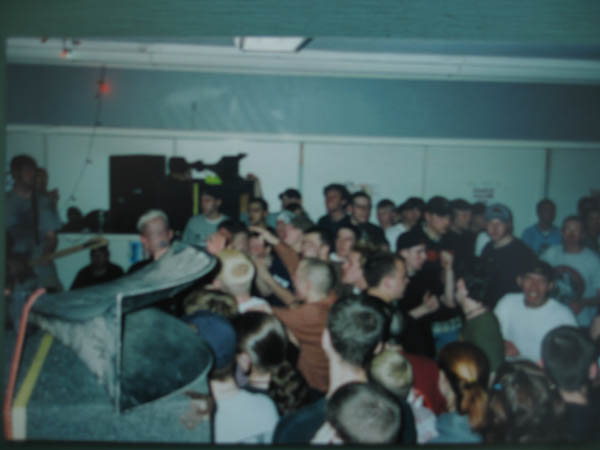 Converge at the Old Store.
Mike: It was huge! And to get that many people, at one show, that we had never done before we worked really really hard to clean out the space to make that happen. The Old Store was an old pharmacy that my grandfather owned, the building was vacant, and my grandmother was trying to sell it. So we cleaned out the space to use and 150 kids showed up and it just blew our minds! When it was finished that night it was like “lets do this again!!” and we did it again, and again and again and again…. And here we are, what year was that? 98? John: Yeah. Mike: Yeah, that was May of 1998. So here we are how many years later? John: 14. Mike: 14 years later still talking about it. John: And still doing things too. Mike: Still involved and that really kind of blows my mind because we weren’t even thinking show #2 at that point. We were doing all this work for one show, and now 14 years later, we are talking about it!
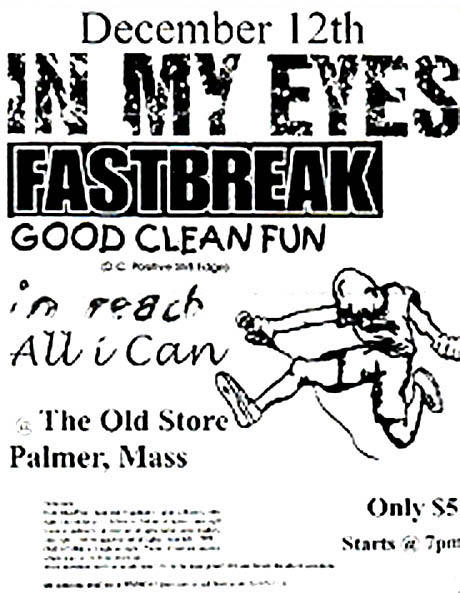 Old Store Show Flyer.
Mike: It overlapped a little bit. John: There were two shows. It was our practice space for a band that I was in called Exit Mentality and one day we said “let’s do a show in the practice space!” It went well and we weren’t planning on doing another one, and the Old Store was still going and I was helping set up shows at that point, but then we did another one and then I think the Old Store was closing. Mike: The building was sold unexpectedly. And then that was it, then we just weren’t doing any shows. We did, now I cant remember the number….. John: was it 29 or 39? Mike: I think it was about 30….30 shows. Yeah something like that. 30 shows at the old store and then it was done, and John was saying “ Let’s just start having shows in the shed!” John: Partly as a joke too!!! We can fit 100 people in here (Laughter erupts) I’m trying to show him…. Look.. one, two….. Mike: I was actually the skeptical one, it’s so funny, “I don’t know if this could work”. It was a shed! A 10’ x 12’ shed. A literal shed in a backyard, in a neighborhood. “I don’t know”. But alright, we’ve got no other place to put on shows. I had asked around to a few different places in town, to see if we could rent it out. I was still pretty young then, I don’t know how old I was, I was young enough that even when I went in to ask about renting the space people were just like “no.” It was definitely like “uh uh….. no way… that is not what this place is for”. And that had happened like five times. And John was like “let’s just do this in the shed!!!!” And I'm like “really? I'm not sure….. I dunno…..” and it was after the first or second show, oh, I didn’t go to the first show, but at the second show I was like “this is awesome” “this totally works”. We did shows twice a month during the warm months of the year and one winter show. John: It was a great show!
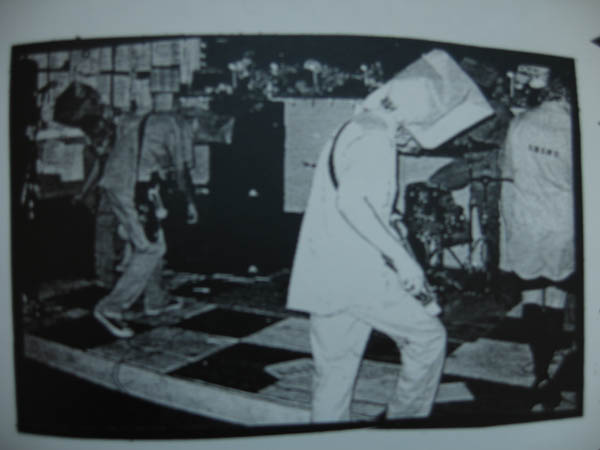 XBXRX at the Old Store.
John: Yeah, well there was a show in November and it had snowed a few feet, and I was sitting outside collecting money and you know, sitting in a chair with snow all around me and people still showed up for that! There was 60 people or more. Mike: Yeah DEPARTURE: Wow, that’s really cool. (talking to John) How did your family feel about the show space being in your backyard? John: I think my mom loved it. She got to talk to all the people that were coming in from different states, or just my friends, she was always meeting new people and sometimes they were inside hanging out with her at the show and she really liked the idea that she could know where I was (at least when I was younger), she could kind of keep an eye on me, I’m doing my thing and she realized that we weren’t drinking or smoking or doing anything crazy so that was good in her eyes. Mike: People were doing crazy things…. John: People were doing crazy things, but it was really cool that she let us do that, and I’m surprised, I don’t know, you are going to have 100 kids in our yard? It may be a liability or what about parking, but it worked out and I think she was really happy about it.
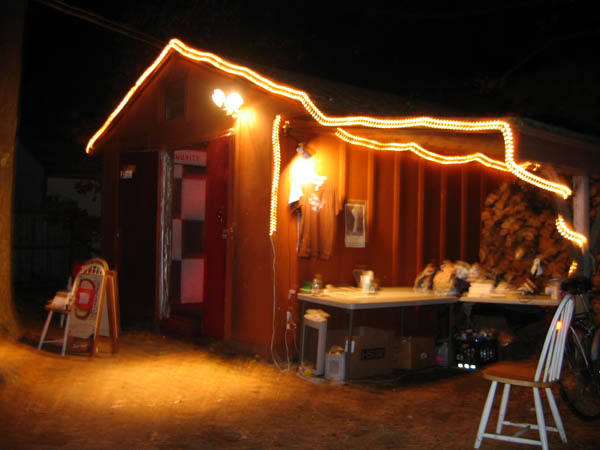 The Shed, Palmer MA.
Mike: This is always so tough to answer. Its like “what’s your favorite show you have ever played?” John: The Friends Forever show stands out. Mike: There’s a lot…. That Friends Forever show …. That was insane! (laughter) That was crazy. That was dangerous. (John laughs) That was insane. DEPARTURE: What happened at the Friends Forever show? Mike: Friends Forever is a band that travels around in their van and they don’t play inside the venue, they play outside the venue. And even though our venue is pretty much outside, they still drove the van into the backyard and they use a lot of fireworks and light shows and (laughter) fans to blow large tarps into big balloons and , yeah, I thought we were going to get arrested (everyone laughs). And this was pretty much the only time where I was like “you know if the police show up now, this is going to be a tough one to explain.” Because all the other shows, you know there would be loud music and a lot of people, and the police showed up often, but I think they knew that we weren’t doing anything “really wrong” and they knew that from the beginning. We had a decent relationship with most of the police officers. At least where they would just come and say “hey, it’s a little loud. Keep it down” or “can you end it quick? Its almost eleven” So we had a decent relationship, but just getting back to other favorite shows, there were a lot…. Mount Eerie shows, Jason Anderson, Can Kickers….. John: The woods show!!!! Mike: The woods show was great. We had everyone come to the shed, and we walked them all out a mile into the woods, and set up a campfire right on the river… we had to walk, I don’t know how many people were at that show? John: There might have been 50? Mike: At least. And just to have to walk that many people out just through this trail in the woods, with a campfire….
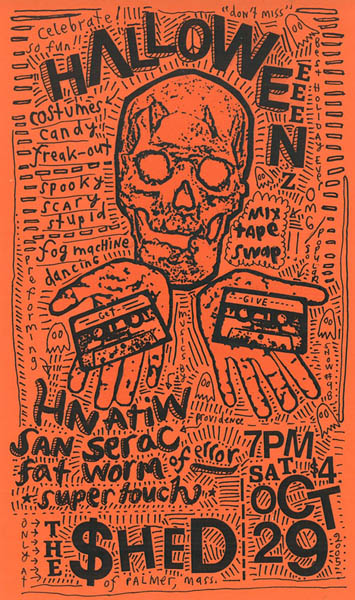 The Shed, Halloween Show Flyer.
John: And they trust us…. “sure yeah…. This will be great” (laughter) Mike: It was totally memorable, but even the local shows, like Eric and Tim HNATIW coming out to play , they were from Ludlow, the town next door, and just thinking about how good of friends they are and became after that. Same thing with the Skarmy of Darkness shows and just the kids from around the area just coming out and playing and forming bands and making mix tapes, recordings, whatever they had. That stuff is really great especially when you start to talk about the bands that are just from this town because they weren’t from here before because there wasn’t any bands here. Super Agent was the only band in Palmer for the first few years. DEPARTURE: Over the years you guys have booked many shows for different artists like Jason Anderson and also Mount Eerie who would keep coming back to your spaces to play shows year after year. Can you talk a little bit about how these relationships are built and why you think these artists did keep coming back to your spaces to play? John: I feel like establishing the relationships with them and being upfront and honest with them about everything we can do with shows and maybe not to expect a lot in terms of money but crowd participation and everything that we can possibly do, we can try to make the best poster possible and put it everywhere and let people know about it and I feel like that effort usually gets recognized by bands and then they would come back. Usually, they would book and put two college shows, one before and one after us, to maybe make up for the money they didn’t get but they would sell a ton of merch and they would sometimes get a couple hundred dollars. Mike: I think that we just provided a nice space for both audience and performers if you want to draw lines like that, but we just had a nice space for that, which I think they sort of caught onto and they certainly weren’t coming back for the money (everyone laughs). We would basically get them as much as we could but its never really that much when you are collecting out of a bucket in your backyard. But just having this unique space to play I think was the attraction. We try to be nice to them (more laughter). John: They could stay at our house, we would cook them breakfast. We would try to go the extra mile and not do crappy things like take a percentage of their merch, or make them sign contracts or anything like that. Mike: We should have had a contract (everyone laughs)
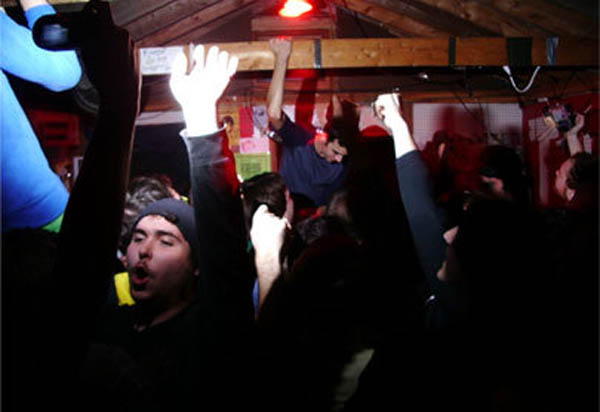 Inside The Shed, Palmer MA.
Mike: We feel very strongly about all ages shows. John: I have never set up a show that wasn’t all ages. DEPARTURE: That is so great. Mike: We have done hundreds of shows, 30 at the old store and 100 at the shed and how many bowling shows have we done now? John: Twenty or more, as well at shows at other spaces. Mike: I wouldn’t do anything that wasn’t all ages. John: I feel like that is part of the reason why bands would come to play The Shed and the Old Store, because it was all ages. Mike: Not too many other places, unless you were at Umass or something, all the other clubs in the area, I cant think of any that are all ages. I think also it came from us remembering what it was like to be 16 or 17 or younger, to discover this kind of stuff, and not being able to go to half of the shows because they were 18+ or 21+. Even when you get into the 21+, it’s a different scene, a different atmosphere. I’ve been to plenty of 21+ shows that were good, it can turn into something else pretty quickly. It’s more background music and its not the focus. That’s kind of what we have always tried to do. You’re here to engage and listen with the bands, there’s always like a big social aspect to our shows, but its not a party that these people are playing at in the background, this is something else. DEPARTURE: Do you feel like with your shows that you would see a lot of the same kids at the shows all the time? Would you say it was a lot of local kids? Did people usually travel from out of state, or did it really vary on who was playing the show? Mike: During the Old store and shed days there was always a steady crowd from just Palmer that would come out and I always thought the best thing about this area, Western MA in general, was that it might not be like a “huge” scene, but everybody there does something. You could just go around the room “oh that person’s in a band, that person does a zine, that person takes pictures, that person makes flyers”. We might not be big, everyone helps out. Very few people just came, stood in a corner, held up a wall and just left. It was just too small of a scene to do that. If you were standing around, someone would ask you to help out or join in at some point. John: At the same time I feel like some people would also drive from Montreal or crazy drives just to come to shows and we would always feel bad. (laughter) “you know we are an actual shed?” “Yeah, we don’t care”. Mike: You know that is actually one of the funniest parts, we are setting up and someone rolls into the drive way and parks on the street with an out of state licence plate and its like “did you really just come from New York? Or did you really come from Burlington? Seriously you drove six or seven hours to get……. Here????? (laughter) That’s awesome, we are going to have a good time tonight…. but holy crap….. can we get you anything? Haha. That was always fun, and just meeting people like that. And bands would make connections to do their own tours and just how all that stuff works is pretty amazing.
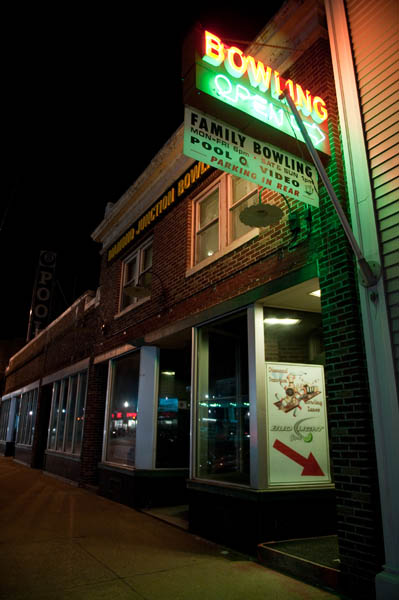 Diamond Junction Bowling Lanes, Palmer MA.
Mike: I knew where that question was going, haha, and this is actually a cool thing to think about. In 1998 there was no... I had an AOL account in ‘98, I had three people that I could email. It wasn’t like now, where you can send one message to thousands of people at once. So yeah, things have changed in that respect. Nobody had cell phones…. I don’t even know how we did it… haha. John: Or how people found out? Mike: We did a lot of flyering, like actual flyering where you post things on telephone poles and windows and you go to other shows and actually hand things out. We did so much of that, because we would go to shows all the time when we were kids. We would go to two, three shows a weekend. It was like standard, it was all you did. So you would bring a stack of flyers, hand them out, tell everyone to come check this out, go to every town around and put posters up and we did have a website fairly early on, but I think the whole internet connection with shows was only just starting at that point. So we really didn’t start taking advantage of that until a few years later, like learning mailing lists. Even bands with getting directions, and originally flyers, as a standard, would have directions printed on the flyers, take the turnpike, turn left….. every flyer would have a list of directions on it. DEPARTURE: Would you put your phone number on flyers? John: Phone number and email. Everything. Mike: What was my line on the flyer? For more cockapoopoopeepee call Mike (laughter) John: It was also funny because we didn’t have cell phones, and it was my parents house, so we would get these random calls, and my mom would say, “Who the hell is calling from Texas??” DEPARTURE: Would you get a lot of phone calls from people needing shows early on? Mike: Yeah a lot of phone calls at first… and then a lot of emails. There was some website out of Austin that would have lists of shows …… you must remember what that was…. John: Just Another Scene? Mike: Mabye it was Just Another Scene… I don’t know…. I signed up for one of those things and I would get emails like crazy. I feel like that was insane, post all your info and then every band in the world contacts you., every horrible band in the world contacts you (laughter) John: We’re a 20 piece band and we have a two hour set and a fog machine….and flames….. haha. We’ve gotten emails like that. And its like, you didn’t really look at what we do.
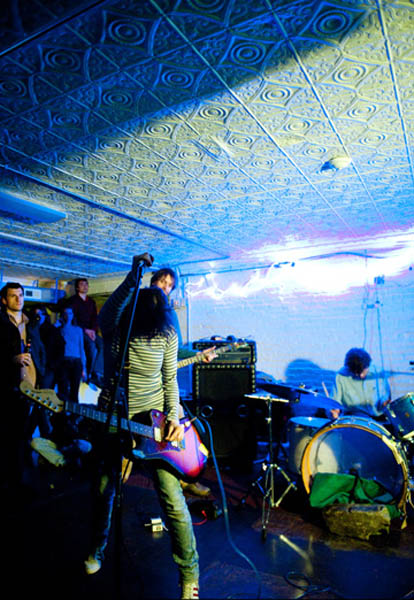 Magik Markers at Diamond Junction Bowling Lanes.
John: We just had a video on MTV and if we could get a guarantee of three grand. Mike: We have a steady draw, all across new England. “No you don’t, you’re lying….. you’ve got nothing!!”. John: Not in Palmer. DEPARTURE: Would you guys have to deal with guarantees? Did that ever come up really? How would you deal with that? Mike: Some people would ask but our standard response was we can’t guarantee because, we just can’t. We would give breakdowns of what we anticipated to get, but we could never really guarantee anything. And anything that we would guarantee was so pitifully small that it wasn’t really worth it. John: The gas, and usually a good time. Mike: Yeah gas and a good time! A captive audience and gas. DEPARTURE: For a lot of areas of the US it can be really difficult to keep a DIY venue going, whether it’s a house, warehouse or art space. Many venues are shut down after not even being open for a year. What do you think some of the reasons are that you think The Shed and the Old store were able to exist for so long? Mike: It is incredibly hard to keep things going, it really is. And whomever is running the space, not just us, but any place, like Flywheel or any place that does it, you need a strong commitment from who is running it, and a good surrounding to operate in, because if you have neighbors that are going to cause problems or you just don’t have a good relationship with the area that you are doing this in, or whoever owns the space that you are using. It’s so easy to have things shut down, kids who like to destroy show spaces, kids who just show up and break things, I’ve just tried to explain to them just how fragile all of this is. If they screw up, we’re all done… If you go out into the woods or into the cemetery and start drinking while we are having a show at The Shed, or the bowling lanes or wherever, and if you get caught, and if anything happens, then we’re done, we are totally done. It’s a totally fragile thing, and so for anything to last more than a year is pretty incredible. John: I feel like being in touch with people that show up to the events, just making rounds, getting to know people, seeing what people are doing, making friends with the neighbors and if you can just keep them updated on what you are up to, that’s really the best you can do. Mike: John and I would bring the neighbors cookies…. John: And passes to the movies. Mike: Yeah passes to the movies at the end of our seasons just to say thanks for putting up with us. There were some good neighbors.
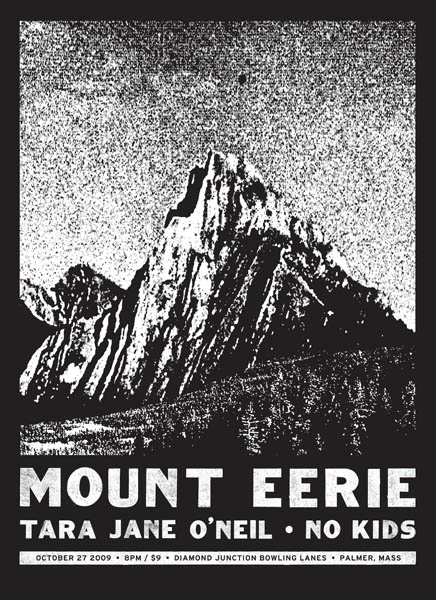 Diamond Junction Bowling Lanes Flyer.
John: Mabye once or twice, but it was rare. Mike: But they put up with us. John: And they reserved the right to make some noise of their own on holidays or certain weekends. It was good. It worked out. DEPARTURE: Can we talk a little bit about the transition from The Shed to your current venue, the Diamond Junction bowling lanes, and was the Shed just at a point where you just had to stop doing shows there? John: I feel like it was a transitional period, for the last two years of doing shows there, there was a housing development going in next door, and Mike and I would see bulldozers doing their thing, there were people building these houses, and it was like “well, this is going to end soon, once those are finished” We can’t compete with that at all, because that’s like 20-30 people who if they have an issue…. That’s it…. We’re done. So it was that and I was ready to move out, I was thinking about college, and it made me feel weird about still doing shows there. We made it to our 100th show and I was like maybe we should just end it there on our own terms before it gets shut down for any reason. Mike: It had been five years of doing shows at The Shed, and we were very fortunate to do shows there for five years, especially considering the setting that we were in, you know being in a backyard, in a neighborhood, every other weekend, March through November, that was a lot for the neighbors and they never asked us to stop, but after five years, we were just like, you know what, this is the 100th show, that’s it, we should just end this before somebody else ends it for us. So that was it, we wanted to go out on our own kind of terms which we did. It was great to have the last two months build up to the end of it. Not that it was the end of shows in town, but it was just the end of that section. And then it took us a few years, but we kept running into the people at the bowling lanes, the two guys that own it now, and I knew them but I didn’t know them well. I had read in the paper that they bought it, and I went down just to check it out because it said that they were renting it out for parties. So, I went down there just to check out the space and I talked to Forrest down there and I was just checking out the area and in my head I’m thinking “ oh my god this is amazing and a perfect place for shows” And he said “what kind of parties are you going to have… kid parties? Adult parties?” And this is where I get nervous because this is the point where everyone turns me away and I said “you know I used to set up a lot of music events” and as soon as I said that his eyes lit up and he was like “yes! This is exactly what we want here!” I’ve never worked with anybody who is even more enthusiastic about the stuff that we are doing then I am myself. He was just like “ This is great! Whatever you want, we will figure it out! Tell me the dates, we will make it work!” He loved the idea and we have had some pretty odd shows there which he may not necessairily get, but he just loves the idea and the atmosphere, and everything about it. We’ve had a really great relationship with the Diamond Junction bowling lanes. DEPARTURE: What inspires you to still book shows after so many years of doing so? Mike: I don’t think we know better. John: It’s what we do, mabye not as much right now but, Mike: I have a young kid at home and one on the way, and it’s all wonderful, but I can’t just do a show every other weekend anymore. It is just not feasible so things have slowed down a little bit for me, but I still want to be involved with setting up shows and making sure things happen. But I mean, I guess I don’t know any other way. It would actually be hard to listen to a lot of live music and not feel like I was involved in it, If that makes sense?
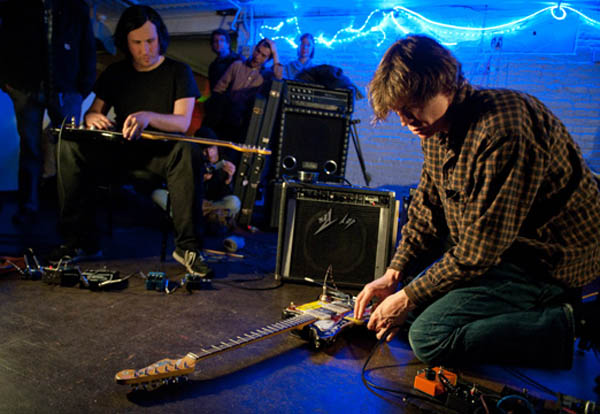 Northampton Wools at Diamond Junction Bowling Lanes.
Mike: I guess I haven’t not been involved so I don’t know how to. John: It’s what we do, and for myself its harder to do it because I work now and I was in school for two years and I like to set up shows in Palmer and collaborate with Mike, but then its still harder to get out and flyer and things like that so I try and do shows in Boston whenever I can but then finding a space is really hard out there, or just getting people to shows. There’s always ten things happening on the same night , so yeah it’s a balance between life and extra fun things. DEPARTURE: I wanted to talk a little bit about going the extra mile in booking shows. How did you get involved in not just making flyers for shows but actually silkscreening them and really taking the time to do something special for bands and for people that go to the show and for yourself. John: Well, I blame this guy…. Mike: I just blame everyone else who makes awesome posters. I think I have shows to thank for getting me into graphic design and into art in general. I remember being in high school and someone asked me what I wanted to be when I grew up and I had no idea….and it just got the point of like “well, I love shows and I love posters and record covers.” That’s what I am going to do. So I have shows to thank for a lot of things. A lot of things have spawned from that so that might also be another reason why I feel like I should stay involved. So yeah, making posters for the shows, I think it all comes from the fact that we can’t offer bands a whole lot, but if we can show that we are serious about doing this, I guess it makes it a little more legit. You know what we do….you know shows in a small town in Western Massachusetts, wait a second if someone is just checking out our website or something and wait a second, there’s all these cool posters and this looks like a legit space somehow…. somehow we pull it off that we are not just a couple of idiots who can answer email. It’s fun and that’s the best part, and that’s how I give back if people like what we do, and you go into peoples houses or you see pictures and there will be posters in the background, these things actually live on beyond me just sweating over this stuff and that’s pretty cool to me. When someone is able to take that and all the fliers that I have collected, those are the memories of the shows that I have gone to. I don’t need photos of everything, the flyers to me….. that’s my memory and I’m just leaving it out there as history. John: its like leaving a little trail. I feel like my experience is very similar where I didn’t know what I was going to do or what I wanted to do after high school, I started making flyers and things and I spent a lot of time on them because the shows were important to me, to us, and they just meant a lot to me, so I am going to spend a lot of time and hours would go by and I was thinking about things like composition and type and this and that and then eventually, Mike was just graduating from school as a graphic designer and I was like “ oh that’s what I want to do!!!” So eventually that’s what got me into Mass Art, my show poster collection was my portfolio of prints that I had made or ones that Mike and I had worked on together. And so naturally if we had a made a poster before then the next show we had coming up we wanted to make it better somehow . Mike: You always set out to make the greatest poster of all time. John: If we are going to do this we might as well learn something from the process, do something better then we did before, experiment…. Mike: And actually the two of us, we will collaborate on a lot of posters, but usually just to save a lot of time and energy we will just split up who does what… so if John is booking the show maybe I’ll make the poster or vice versa…. but we are both on the same wavelength for a lot of things that we can just shoot each other a quick email or a phone call and talk about developing them …. “Move this here…” “what’s the concept,” so we can bounce that stuff off each other pretty quickly and be pretty honest about it too. John: You work with each other for this long, you don’t really mind being honest with each other…. Mike: “Oh John, that’s great…..” and its like “no John…you should probably move that..” “are you thinking about this?” Or him telling me, “Mike…. That’s really not a good idea.” John: And the thing Mike touched on earlier… I forget when it was, but before a show with Phil from Mount Eerie, we were having lunch or something, and he said “you know, it’s so great that you put so much effort into these posters because it is really what legitimatizes what you do, and I can tell that you guys give a shit about the show and having me...” and this and that, and that was one of the things that stood out. Sometimes even a real club won’t put that much effort into promoting it or how the poster looks or any of that, and it costs a lot of money too, to screenprint posters. So once we had that validation we had to just run with it…this is getting the desired effect. Its working so.... DEPARTURE: I almost feel like that’s one of the most exciting things about DIY shows vs. club shows. I mean the club shows will sometimes hire someone to be a screenprinter for a special show that is coming up, but a lot of times, like even in town like the Iron Horse and what not, they just put their flyers on color paper and they all look the same and its all really boring and it doesn’t even matter who is playing, where as I feel like the care going into handmade stuff is really important. Mike: Exactly. I like walking away with something, and if I am walking away with something it should be nice. DEPARTURE: What advice would you give someone who is interested in starting up their own DIY venue? (meanwhile…. inside the restaurant seems to be getting really ready to close or might already be closed. John gets up to check) Mike: I’d hate to be like the last people here…. “blah, blah, blah, blah....” John: Its 9:30. Mike: Oh, its 9:30? DEPARTURE: So maybe we should go?? Mike: Yeah….. but we can answer that question first…. DEPARTURE: So yeah, basically what advice would you give to someone who wants to start booking shows? Mike: I would love to give advice (laughter erupts) especially at this point since I know that I need to cut back a little bit on booking shows… I would love to pass the torch…. I think the easiest thing to say would be to make sure that you are booking the shows that you want to be at. You are going to make sure that they run smoothly and go the way they are supposed to. Not just set up a bunch of shows that you think will be successful, or for some other reason. I’ve always put on shows because those are the kind of shows I want to go to. John: I don’t know if I have much advice, we kind of make it up as we go and be upfront with everyone. Be honest about what you can do and what you’re doing, whether its bands or neighbors or the venue or whomever. Mike: We could write the how to…. Okay…. Do a poster, send an email etc…. John: We’ve got the process down, but running a venue… I dunno…. Did we even ever run a venue??? Mike: We used a store front… a backyard shed…. John: I feel like we put on shows.
 Mike and John.
http://www.theoldstore.org/
John’s website:
An exciting event that John curated now on view: |